Buy ukrgazeta.eu ?
We are moving the project
ukrgazeta.eu .
Are you interested in purchasing the domain
ukrgazeta.eu ?
domain@kv-gmbh.de · 0541-91531010
Buy ukrgazeta.eu ?
What are the effects of the space race?
The space race had several effects on both the United States and the Soviet Union. It led to significant advancements in technology, particularly in the fields of rocketry and telecommunications. It also fueled the development of new materials and technologies that have had lasting impacts on various industries. Additionally, the space race had a significant impact on the political and cultural landscape, as it heightened the rivalry between the two superpowers and led to increased investment in science and education. **
What questions are there about the Space Race?
Some questions about the Space Race include: What were the motivations and goals of the competing nations, the United States and the Soviet Union, in participating in the Space Race? How did the Space Race impact technological advancements and scientific discoveries? What were the political, social, and economic implications of the Space Race for both nations and the world? How did the Space Race contribute to the development of space exploration and international cooperation in space missions? **


Similar search terms for Space Race
Top-Angebote
Products related to Space Race:
-
From the Archives: Black History and Culture Value PackThis brand-new series is rooted in a profound commitment to shedding light on some of the important -- and often lesser-known -- aspects of Black history. From the Archives features landmarks, events, people, and artistic endeavors that have played...26,99 $*Shipping: 0,00 $Secure redirect to the provider
-
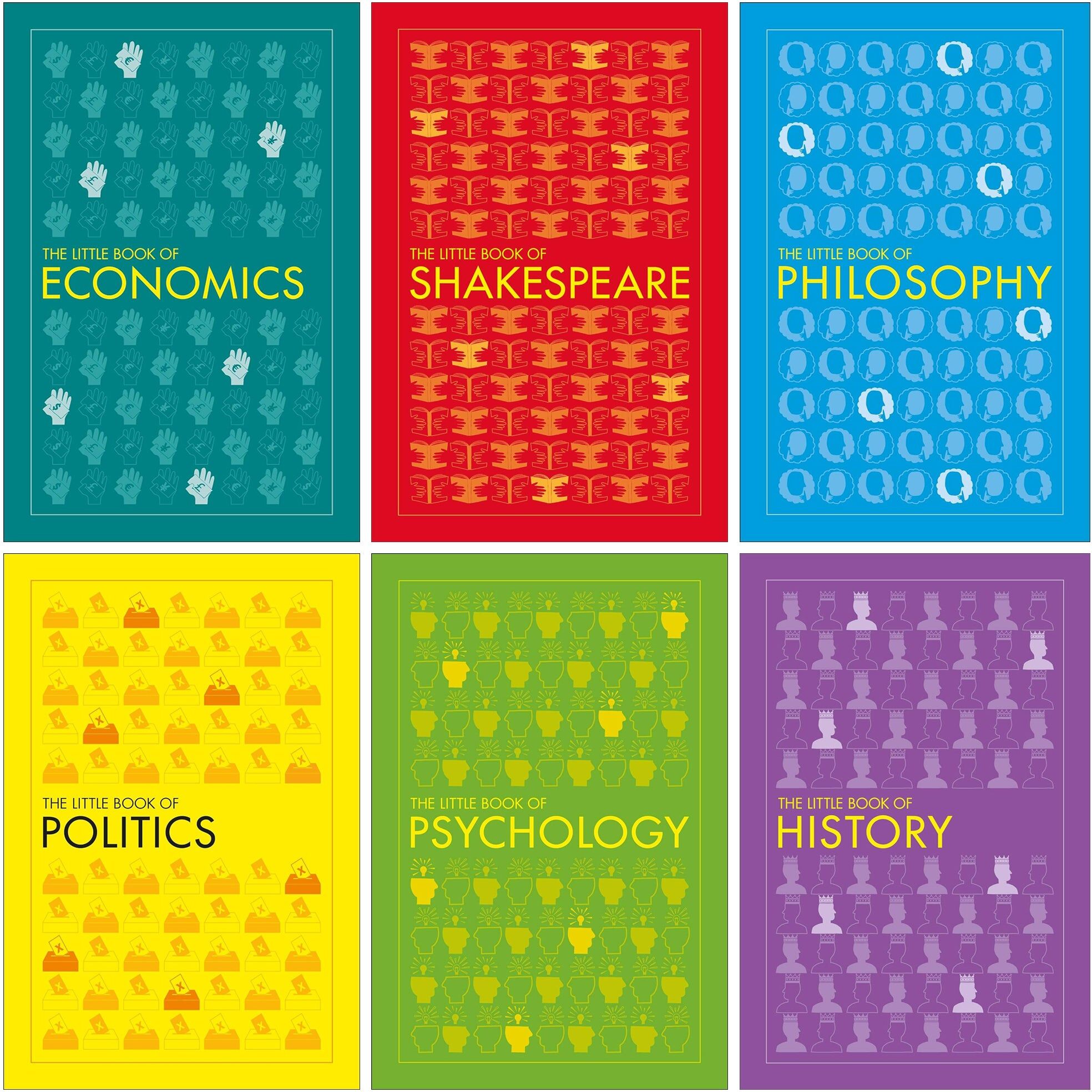
DK The Little Book Of Series 6 Books Collection Set (Economics, Politics, Shakespeare, Philosophy, Psychology, History)The Little Book Of Economics From the earliest forms of currency to the Industrial Revolution, and from the birth of the stock market to free-market capitalism and globalized trade, The Little Book of Economics brings economic theory and the work of key economists to life. Journeying through centuries of economic thought, it is the perfect pocket-sized guide to the subject. The Little Book Of Politics From the origins of democracy to Machiavelli's cunning statecraft, and from Rousseau's "social contract" to the American Declaration of Independence, Marxist communism, the dawn of populism, and identity politics, The Little Book of Politics examines the philosophies behind the different political beliefs and methods of government used around the world over the course of human history. The Little Book Of Shakespeare This bold book covers every work, from the comedies of Twelfth Night and As You Like It to the tragedies of Julius Caesar and Hamlet, plus lost plays and less well-known works of poetry. Easy-to-understand graphics and illustrations bring the themes, plots, characters and language of Shakespeare to life, including illustrated timelines which offer an at-a-glance summary of the action for each play. With detailed plot summaries and an in-depth analysis of the major characters and themes, this is a brilliant, innovative exploration of the entire canon of Shakespeare plays, sonnets and poetry. The Little Book Of Philosophy To the complete novice learning about philosophy can be daunting - The Little Book of Philosophy changes all that. With the use of powerful and easy-to-follow images, famous quotations, and explanations that are easily understandable, this book cuts through any misunderstandings to demystify the subject. The Little Book Of Psychology DK's The Little Book of Psychology answers all these questions and provides an insight into this fascinating field of science. Whether you are a student, an expert, a novice, or have a general interest in the human mind, this portable guide is the perfect choice to start exploring and understanding psychology. The Little Book Of History The Little Book of History charts world history from the dawn of civilisation to the modern culture we live in today. From the origins of homo-sapiens to the release of Nelson Mandela, from the French Revolution to the Space Race, The Little Book of History is a stunning exploration of the human timeline up to and including modern Islam, the world wide web, and the global financial crisis.14,99 £*Shipping: 2,99 £Secure redirect to the provider
-
Uplifted Finds Aero Vista Space Capsule Travel Module greyFacilitate highsecurity transit for your pet with the AeroVista Space Capsule Module, a professionalgrade transport system engineered with panoramicobservation logic. This highutility carrier features a specialized transparent APC viewing portal...201,97 $*Shipping: 0,00 $Secure redirect to the provider



-
Did the Soviets de facto win the Space Race?
While the Soviet Union achieved several significant milestones in the Space Race, such as launching the first satellite (Sputnik) and sending the first human (Yuri Gagarin) into space, the United States ultimately achieved the ultimate goal of landing humans on the moon with the Apollo 11 mission in 1969. Therefore, it can be argued that the United States won the Space Race in terms of the most significant accomplishment. However, the Soviet Union's early successes did have a major impact on the space exploration efforts of both countries and the world as a whole. **
-
Who won the space race, the USA or the Soviet Union?
The United States ultimately won the space race against the Soviet Union. The US achieved a significant milestone by landing the first humans on the moon during the Apollo 11 mission in 1969. This accomplishment solidified the US as the leader in space exploration and technology. The Soviet Union made significant advancements in space exploration as well, but the US emerged as the clear winner in the space race. **
-
Who won the race to space, the USA or the Soviet Union?
The race to space was won by the Soviet Union. They achieved several significant milestones before the United States, including launching the first artificial satellite, Sputnik, and sending the first human, Yuri Gagarin, into space. However, the United States eventually caught up and surpassed the Soviet Union by landing astronauts on the moon during the Apollo missions. **
-
How is the idea of living space connected to the theory of race?
The idea of living space, or "Lebensraum," was a concept used by the Nazis to justify their expansionist policies and the need for territorial conquest to provide space for the "superior" Aryan race. This concept was connected to the theory of race through the belief in racial hierarchy, with the Nazis viewing themselves as the superior race entitled to dominate and displace other "inferior" races. The idea of living space was used to justify the subjugation and eventual elimination of non-Aryan races, as well as the colonization and exploitation of their territories. Overall, the concept of living space was deeply intertwined with the racist ideology of the Nazis and their belief in the superiority of the Aryan race. **


Which movies and series are about space and space travel?
Some popular movies and series about space and space travel include "Interstellar," "The Martian," "Gravity," "Apollo 13," "Star Trek," "The Expanse," and "Lost in Space." These works often explore themes such as human exploration of the unknown, survival in harsh environments, and the wonders of the universe. They captivate audiences with their depictions of space missions, futuristic technology, and the challenges faced by astronauts. **
What is the history of the theory of race?
The theory of race has a long and complex history, dating back to ancient civilizations such as the Greeks and Romans who categorized people based on physical characteristics. During the European colonial era, the concept of race was used to justify the subjugation and exploitation of non-European peoples. In the 18th and 19th centuries, scientific racism emerged, with scholars attempting to use biological and anthropological evidence to support the idea of racial hierarchies. However, in the 20th century, the theory of race came under increasing scrutiny as social scientists and activists challenged its validity and highlighted its role in perpetuating discrimination and inequality. Today, the theory of race is widely rejected as a valid scientific concept, with the understanding that race is a social construct rather than a biological reality. **
Top-Angebote
Products related to Space Race:
-
Elliott & Thompson The Future of Geography: How Power and Politics in Space Will Change Our World By Tim MarshallSpy satellites orbiting the Moon. Space metals worth billions. Humans on Mars within our lifetimes. This isn’t science fiction. It’s astropolitics. We’re entering a new space race – and it could revolutionise life on Earth. Space: the new frontier, a wild and lawless place. It is already central to communication, economics, military strategy and international relations on Earth. Now, it is the latest arena for human exploration, exploitation – and, possibly, conquest. We’re heading up and out, and we’re taking our power struggles with us. China, the USA and Russia are leading the way. From physical territory and resources to satellites, weaponry and strategic choke points, geopolitics is as important in the skies above us as it is down below. If you’ve ever wondered if humans are going back to the Moon, who will benefit from exploration or what space wars might look like, the answers are here. With all the insight and wit that have made Tim Marshall the UK’s most popular writer on geopolitics, this gripping book shows how we got here and where we’re going, covering great-power rivalry; technology; commerce; combat in space; and what it means for all of us down here on Earth. This is essential reading on power, politics and the future of humanity.7,99 £*Shipping: 2,99 £Secure redirect to the provider
-
From the Archives: Black History and Culture Value PackThis brand-new series is rooted in a profound commitment to shedding light on some of the important -- and often lesser-known -- aspects of Black history. From the Archives features landmarks, events, people, and artistic endeavors that have played...26,99 $*Shipping: 0,00 $Secure redirect to the provider
-
DK The Little Book Of Series 6 Books Collection Set (Economics, Politics, Shakespeare, Philosophy, Psychology, History)The Little Book Of Economics From the earliest forms of currency to the Industrial Revolution, and from the birth of the stock market to free-market capitalism and globalized trade, The Little Book of Economics brings economic theory and the work of key economists to life. Journeying through centuries of economic thought, it is the perfect pocket-sized guide to the subject. The Little Book Of Politics From the origins of democracy to Machiavelli's cunning statecraft, and from Rousseau's "social contract" to the American Declaration of Independence, Marxist communism, the dawn of populism, and identity politics, The Little Book of Politics examines the philosophies behind the different political beliefs and methods of government used around the world over the course of human history. The Little Book Of Shakespeare This bold book covers every work, from the comedies of Twelfth Night and As You Like It to the tragedies of Julius Caesar and Hamlet, plus lost plays and less well-known works of poetry. Easy-to-understand graphics and illustrations bring the themes, plots, characters and language of Shakespeare to life, including illustrated timelines which offer an at-a-glance summary of the action for each play. With detailed plot summaries and an in-depth analysis of the major characters and themes, this is a brilliant, innovative exploration of the entire canon of Shakespeare plays, sonnets and poetry. The Little Book Of Philosophy To the complete novice learning about philosophy can be daunting - The Little Book of Philosophy changes all that. With the use of powerful and easy-to-follow images, famous quotations, and explanations that are easily understandable, this book cuts through any misunderstandings to demystify the subject. The Little Book Of Psychology DK's The Little Book of Psychology answers all these questions and provides an insight into this fascinating field of science. Whether you are a student, an expert, a novice, or have a general interest in the human mind, this portable guide is the perfect choice to start exploring and understanding psychology. The Little Book Of History The Little Book of History charts world history from the dawn of civilisation to the modern culture we live in today. From the origins of homo-sapiens to the release of Nelson Mandela, from the French Revolution to the Space Race, The Little Book of History is a stunning exploration of the human timeline up to and including modern Islam, the world wide web, and the global financial crisis.14,99 £*Shipping: 2,99 £Secure redirect to the provider
-
What are the effects of the space race?
The space race had several effects on both the United States and the Soviet Union. It led to significant advancements in technology, particularly in the fields of rocketry and telecommunications. It also fueled the development of new materials and technologies that have had lasting impacts on various industries. Additionally, the space race had a significant impact on the political and cultural landscape, as it heightened the rivalry between the two superpowers and led to increased investment in science and education. **
-
What questions are there about the Space Race?
Some questions about the Space Race include: What were the motivations and goals of the competing nations, the United States and the Soviet Union, in participating in the Space Race? How did the Space Race impact technological advancements and scientific discoveries? What were the political, social, and economic implications of the Space Race for both nations and the world? How did the Space Race contribute to the development of space exploration and international cooperation in space missions? **
-
Did the Soviets de facto win the Space Race?
While the Soviet Union achieved several significant milestones in the Space Race, such as launching the first satellite (Sputnik) and sending the first human (Yuri Gagarin) into space, the United States ultimately achieved the ultimate goal of landing humans on the moon with the Apollo 11 mission in 1969. Therefore, it can be argued that the United States won the Space Race in terms of the most significant accomplishment. However, the Soviet Union's early successes did have a major impact on the space exploration efforts of both countries and the world as a whole. **
-
Who won the space race, the USA or the Soviet Union?
The United States ultimately won the space race against the Soviet Union. The US achieved a significant milestone by landing the first humans on the moon during the Apollo 11 mission in 1969. This accomplishment solidified the US as the leader in space exploration and technology. The Soviet Union made significant advancements in space exploration as well, but the US emerged as the clear winner in the space race. **
Similar search terms for Space Race
-
Uplifted Finds Aero Vista Space Capsule Travel Module greyFacilitate highsecurity transit for your pet with the AeroVista Space Capsule Module, a professionalgrade transport system engineered with panoramicobservation logic. This highutility carrier features a specialized transparent APC viewing portal...201,97 $*Shipping: 0,00 $Secure redirect to the provider
-
Two Roads Natives & Long Walk to Freedom 2 Book Collection Set by Akala & Nelson Mandela – Race, History & Inspirational Biography CollectionNatives Race and Class in the Ruins of Empire By Akala & Long Walk To Freedom The Autobiography of Nelson Mandela By Nelson Mandela 2 Books Collection Set: Natives Race and Class in the Ruins of Empire: From the first time he was stopped and searched as a child, to the day he realised his mum was white, to his first encounters with racist teachers - race and class have shaped Akala's life and outlook. In this unique book he takes his own experiences and widens them out to look at the social, historical and political factors that have left us where we are today.Covering everything from the police, education and identity to politics, sexual objectification and the far right, Nativesspeaks directly to British denial and squeamishness when it comes to confronting issues of race and class that are at the heart of the legacy of Britain's racialised empire. Long Walk To Freedom The Autobiography of Nelson Mandela: The riveting memoirs of the outstanding moral and political leader of our time, A Long Walk to Freedom brilliantly re-creates the drama of the experiences that helped shape Nelson Mandela's destiny. Emotive, compelling and uplifting, A Long Walk to Freedom is the exhilarating story of an epic life; a story of hardship, resilience and ultimate triumph told with the clarity and eloquence of a born leader.11,95 £*Shipping: 2,99 £Secure redirect to the provider
-
Uplifted Finds Aero Vista Space Capsule Travel Module blackFacilitate highsecurity transit for your pet with the AeroVista Space Capsule Module, a professionalgrade transport system engineered with panoramicobservation logic. This highutility carrier features a specialized transparent APC viewing portal...201,97 $*Shipping: 0,00 $Secure redirect to the provider
-
Who won the race to space, the USA or the Soviet Union?
The race to space was won by the Soviet Union. They achieved several significant milestones before the United States, including launching the first artificial satellite, Sputnik, and sending the first human, Yuri Gagarin, into space. However, the United States eventually caught up and surpassed the Soviet Union by landing astronauts on the moon during the Apollo missions. **
-
How is the idea of living space connected to the theory of race?
The idea of living space, or "Lebensraum," was a concept used by the Nazis to justify their expansionist policies and the need for territorial conquest to provide space for the "superior" Aryan race. This concept was connected to the theory of race through the belief in racial hierarchy, with the Nazis viewing themselves as the superior race entitled to dominate and displace other "inferior" races. The idea of living space was used to justify the subjugation and eventual elimination of non-Aryan races, as well as the colonization and exploitation of their territories. Overall, the concept of living space was deeply intertwined with the racist ideology of the Nazis and their belief in the superiority of the Aryan race. **
-
Which movies and series are about space and space travel?
Some popular movies and series about space and space travel include "Interstellar," "The Martian," "Gravity," "Apollo 13," "Star Trek," "The Expanse," and "Lost in Space." These works often explore themes such as human exploration of the unknown, survival in harsh environments, and the wonders of the universe. They captivate audiences with their depictions of space missions, futuristic technology, and the challenges faced by astronauts. **
-
What is the history of the theory of race?
The theory of race has a long and complex history, dating back to ancient civilizations such as the Greeks and Romans who categorized people based on physical characteristics. During the European colonial era, the concept of race was used to justify the subjugation and exploitation of non-European peoples. In the 18th and 19th centuries, scientific racism emerged, with scholars attempting to use biological and anthropological evidence to support the idea of racial hierarchies. However, in the 20th century, the theory of race came under increasing scrutiny as social scientists and activists challenged its validity and highlighted its role in perpetuating discrimination and inequality. Today, the theory of race is widely rejected as a valid scientific concept, with the understanding that race is a social construct rather than a biological reality. **
* All prices are inclusive of VAT and, if applicable, plus shipping costs. The offer information is based on the details provided by the respective shop and is updated through automated processes. Real-time updates do not occur, so deviations can occur in individual cases. ** Note: Parts of this content were created by AI.